 The Cape Society

Apr
- Fri 29 May 2020
- Hume
- Discover David Hume; a member of Cape Club contemporary, The Poker Club, a man who walked and shared Edinburgh's streets with Sir Precentor and who had his work published in Walter Ruddiman's Weekly Magazine, as Robert Fergusson did.
- Meet outside the main entrance of the Scottish National Portrait Gallery at 19:30. Guests welcome (but limited to eight; sort of).

- Report
-
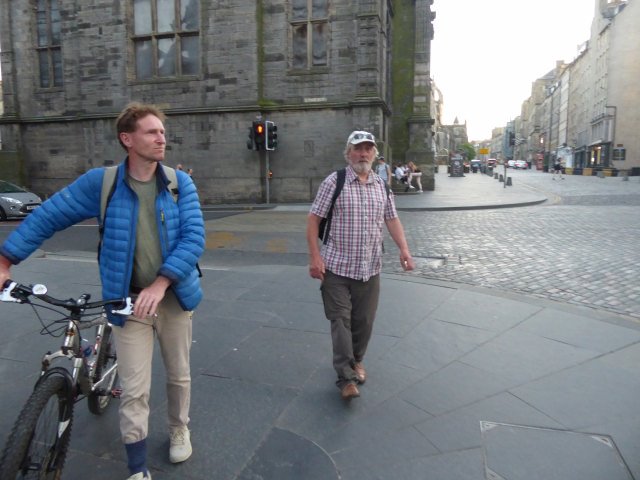
Steve met Colin outside the main entrance to the Scottish National Portrait gallery at the appointed hour and
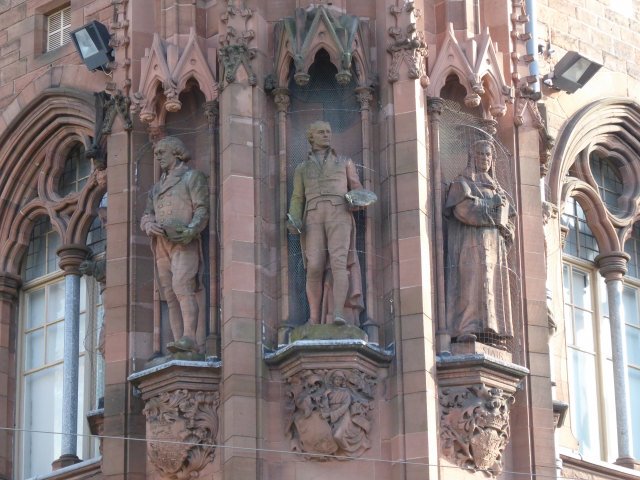
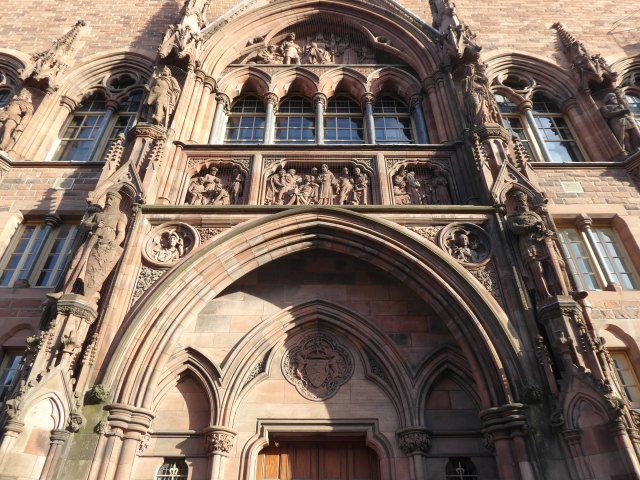
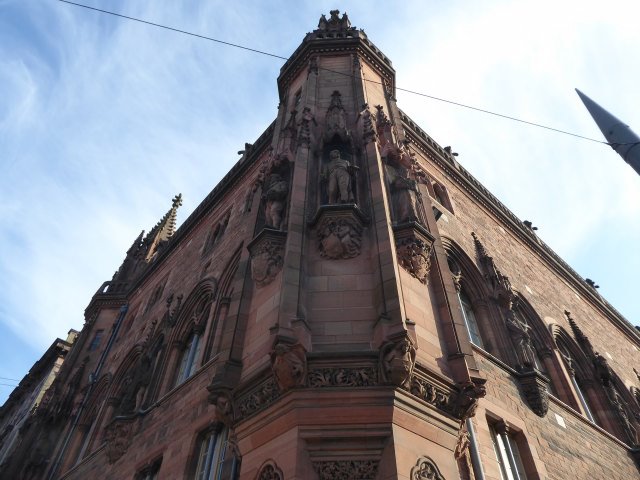
the Manor began. First stop, a loose Cape Connection: occupying the same spot as the statue of Hume
on the facade of the building but at its opposite (eastern) end, a statue of former Cape Club member, Sir Dicovery with
paint brush and pallete in hand. Possibly coincidentally, his statue looks upon his former house in York Place.
Of the Hume statue, Steve remarked on the good likeness of the statue to Ramsay's painting of Hume, although, the actual stature may
have been a little on the slim side: Hume was a 'large jolly fellow'.
Steve gave some idea of the stature of Hume by listing some of the many monuments, both physical and conceptual,
which bare his name, including buildings, institutes and societies. These exist in many other places other than Edinburgh
and are in-keeping with general opinion that, even now, Hume is one of the most important English language philosophers.
This also seemed like a good opportunity to recall Auld Reekie's Old Town as it would've been in Hume and the Cape Club's day:
dirty, smelly, busy, noisy, with early morning gutter clearances, 10pm chamber-pot chuck-out and drums heralding city gate closing
(double that cape), plenty of market stalls with animal carcuses, animal hides, candles, bread, wheat, barley, malt, ale, goods
coming up from Leith through the Netherbow (double that cape again), the City Guard exercising
in the high street and stationed throughout the city throughout the day, as well as the prodimnantly Highland caddies
gabbin' in the gaelic and transporting the gentry wherever they willed.
Some additional context around Hume and his period in history was added with reference to Newton, Galileo
and scientific momentum which was creating friction with prevailing opinions of the church.
A short walk around the corner from the Scottish National Portrait Gallery and the pair
arrived in South St David Street which was home to Hume when he died, his address being 21 St David Street. The precise location
Steve was unable to find but he did mention there is rumour the street is cheekily named after him: Hume was considered
to be somewhere on the scale of atheist to agnostic (so definitely no 'saint' as far as church-goers of his day would've been concerned).
On the way up The Mound, Dez joined the company while Steve and Colin discussed
whether Hume may have been gay (he never took a wife or had children) and Steve gave some examples of the nature of
Hume's philosophy: cause and effect, billiard balls, being born in a cave, revealed religion, experience and suicide.
The next stop was the statue of Hume where the High Street meets Lawnmarket. This is an apt site as Hume looks over to
the Advocates Library which may have afforded much of the material for Hume's best-seller, The History of England.
The statue is also within a stone's throw of his birthplace and you would only have to walk a little further to reach two
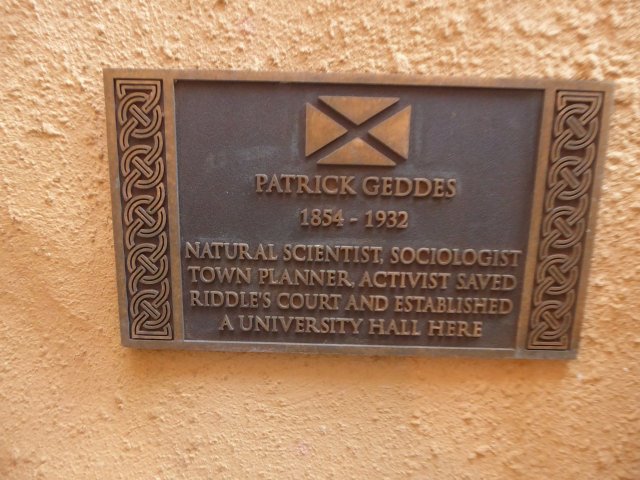
former abodes, one in Riddle's Court (another Cape connection) and one in James Court. Another notable Cape connection
is the man Hume took over from at the the Advocates library was the uncle of the aforementioned publisher, Walter Ruddiman.
What is less apt is the tourist-tradition (evidenced by the statue's shiny toe) which Hume would
categorise as part of a 'system of superstition', something his philosophy strongly discouraged.
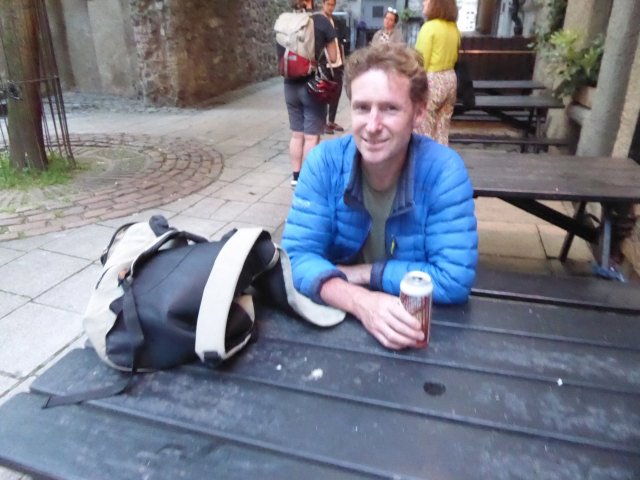
There was a short libation break by the Jolly Judge where Hume's life, character and view on suicide was discussed.
His thirst for knowledge, good nature, popularity as a dinner guest, desire for literary fame and
important 'civil service' related jobs were all touched on in this coversation.
Liquid refreshment was followed by a visit to Riddle's Court and a saunter down to former Big Jack's Land in the Canongate
(where Hume lived when he wrote The History of England)
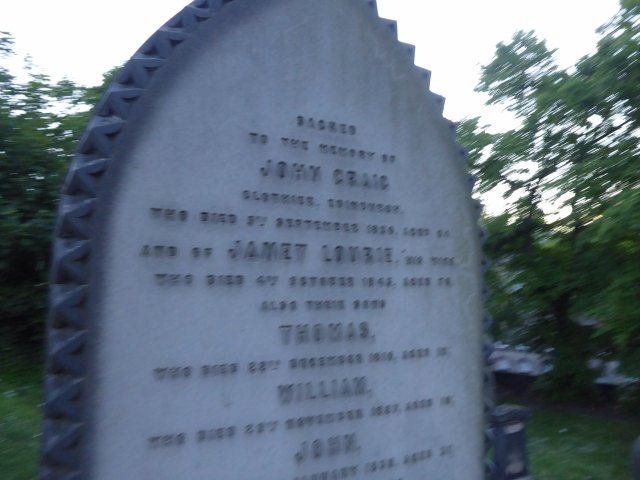
before heading to the Old Calton Burial Ground to round off the Manor with an evening toasting and jaykay-ing
around with Hume in his final resting place (thanks mainly to Dez and his Tamnavulin).
Thanks to everyone who supported the Manor by coming along and joining the fun.
Riddle Me This
Apprentice JKs
Rumbled